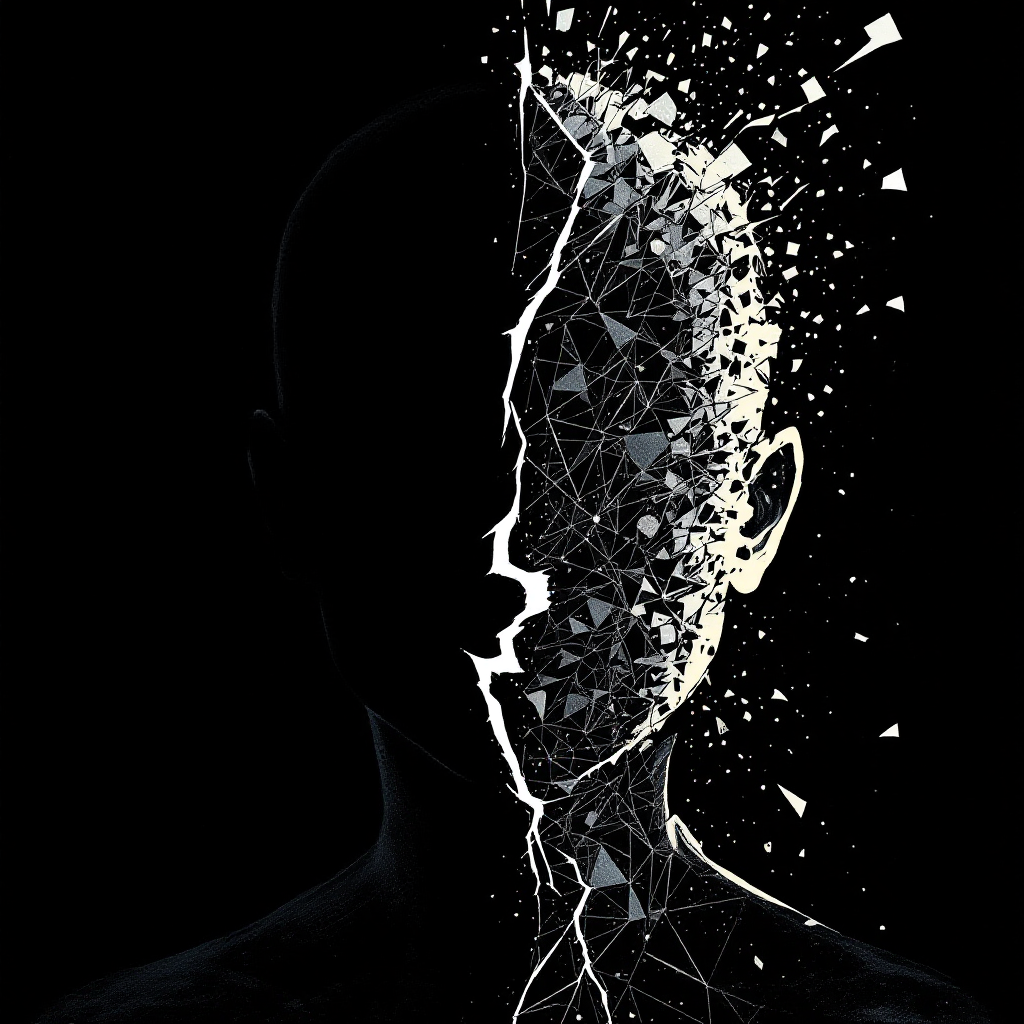
What is cognitive dissonance? It’s the uncomfortable tension that arises when you hold two contradictory beliefs, or when new information clashes with what you already accept as true. Your brain experiences this collision as threat, activating the same neural regions associated with physical pain. Most people resolve this tension not by updating their beliefs, but by rejecting the new information entirely. That automatic rejection is why you stay stuck in patterns you consciously know don’t serve you.
The term was coined by psychologist Leon Festinger in 1957 after studying a doomsday cult that predicted the world would end on a specific date. When the prophecy failed, members didn’t abandon their beliefs. They doubled down, claiming their faith had saved humanity. Festinger observed that cognitive dissonance produces predictable responses: rationalization, denial, and an intensified commitment to the original belief. The discomfort of being wrong felt more dangerous than clinging to a demonstrably false idea.
This isn’t a personality flaw. It’s how your nervous system is wired. The brain prioritizes consistency over accuracy because uncertainty historically meant danger. When contradiction arises, your limbic system, the emotional processing center, sounds the alarm before your prefrontal cortex can evaluate the evidence. What you experience as stubborn resistance is actually your biology protecting the framework it already built.
The Mechanism Behind the Friction
Cognitive dissonance operates through a specific sequence. First, contradiction enters awareness: you smoke but know smoking causes cancer, you value honesty but told a significant lie, you believe you’re compassionate but ignored someone in need. That gap between belief and behavior, or between two competing beliefs, creates psychological tension. The brain reads this tension as instability and mobilizes resources to resolve it.
Three pathways typically open. The first is to change the behavior: quit smoking, confess the lie, help the person you ignored. This path requires the most energy and often threatens identity, so it’s rarely chosen. The second is to change the belief: decide smoking isn’t that harmful, reframe the lie as protective, convince yourself the person didn’t really need help. This path is cognitively cheaper and preserves the existing self-image. The third is to add new information that resolves the conflict: smoke but take vitamins to offset the damage, justify the lie because the truth would have caused more harm, tell yourself you’ll help next time.
In most cases, people choose the second or third option. Not because they’re dishonest, but because ego dissolution and sovereignty require a level of inner stability most people haven’t built. The contradiction doesn’t disappear. It gets reframed until it stops generating discomfort.
Why Identity Makes Dissonance Worse
The deeper a belief is tied to your identity, the more painful the dissonance becomes when that belief is challenged. If you define yourself as a good parent, evidence that your parenting style harmed your child doesn’t just challenge a behavior. It threatens who you believe you are. The nervous system escalates the response accordingly.
Research shows that threats to core identity activate the anterior cingulate cortex and the insula, brain regions associated with both physical pain and emotional distress. To your body, being told you’re wrong about something central to your self-concept feels almost identical to being physically injured. This is why people defend false beliefs with such intensity. They aren’t protecting an idea. They’re protecting the architecture of self.
This dynamic plays out across every domain. Political beliefs become identity markers, so contradictory evidence feels like a personal attack. Religious doctrine becomes inseparable from moral worth, so questioning it feels like damnation. Dietary choices become tribal signals, so changing your mind feels like betrayal. The belief itself may be arbitrary, but once it’s woven into identity, letting it go requires dismantling part of who you think you are.
Cognitive Dissonance in Daily Life
You encounter cognitive dissonance constantly, though you rarely name it. You know processed food harms your body but eat it anyway, resolving the tension by telling yourself you’ll start eating clean next week. You believe in environmental responsibility but drive a gas-guzzling vehicle, justifying it because public transit isn’t convenient. You value authenticity but perform a curated version of yourself online, explaining it as necessary for professional survival.
Each rationalization is a small surrender. Not to external force, but to the discomfort of holding contradiction. Over time, those surrenders accumulate. The gap between what you know and how you live widens until the two barely communicate. You become a person who knows better but doesn’t do better, and the cognitive dissonance required to maintain that gap becomes the background hum of your inner life.
What makes this particularly insidious is that the rationalization often sounds reasonable. You’re not lying to yourself in an obvious way. You’re constructing a narrative that lets you hold both sides of the contradiction without the friction. The problem is that biological coherence and inner alignment can’t be faked. The body registers the split even when the mind has smoothed it over.
The Architects of Control Use This Against You
Every system of control understands cognitive dissonance and uses it deliberately. Advertising creates dissonance by showing you a life you don’t have, then offers a product that supposedly bridges the gap. Political campaigns create dissonance by framing the opposing side as both weak and dangerous, forcing you to pick the contradiction that feels safer. Religious institutions create dissonance by teaching love and compassion while modeling judgment and exclusion, then offer obedience as the resolution.
The media refines this to a science. You’re shown images of suffering but told you’re powerless to help, generating guilt that can only be relieved by donating to the institution that manufactured the dissonance. You’re told to trust the experts but also that experts disagree, creating confusion that makes you cling to whichever authority figure feels most familiar. You’re given contradictory health advice until you stop questioning entirely and default to whatever’s easiest.
These aren’t accidents. They’re deliberate manipulations of your discomfort threshold. The more cognitive dissonance you carry, the more susceptible you become to external resolution. You’ll accept guidance from anyone who promises to quiet the noise, even if that guidance isn’t in your interest. The goal isn’t to destroy your capacity for reason. It’s to keep you too uncomfortable to use it.
The most effective manipulation doesn’t look like control at all. It looks like relief. That’s why the complete framework in Master Thyself doesn’t just name the mechanisms. It gives you the protocols for reclaiming the sovereignty that cognitive dissonance quietly erodes.
The Body Knows What the Mind Denies
Cognitive dissonance doesn’t stay cognitive. The tension between belief and reality, or between two competing beliefs, creates physiological stress. Cortisol rises. Heart rate variability drops. The nervous system signals that something is unresolved, even when the conscious mind has constructed a story that makes the contradiction feel acceptable.
This is why people who live in sustained cognitive dissonance often develop chronic stress symptoms: insomnia, digestive issues, unexplained anxiety, low-grade depression. The body is trying to communicate what the mind refuses to acknowledge. The split isn’t sustainable. Something has to give. Either the belief changes, the behavior changes, or the body begins to break down under the strain of holding both.
The resolution isn’t always dramatic. Sometimes it’s as simple as admitting you were wrong. But that admission requires something most people haven’t cultivated: the ability to observe your own thoughts and beliefs without fusing with them. REDACTED, READ CHAPTER 4. The full protocol for developing that capacity is detailed in Chapter 4 of Master Thyself.
Resolving Dissonance Without Surrendering Truth
The ego resolves cognitive dissonance by protecting itself. The self resolves it by aligning with what’s true. The difference is whether you’re defending an identity or refining it. Most people spend their entire lives in the first mode. They encounter contradiction and immediately ask: how do I make this go away without changing who I think I am?
The alternative is to ask: what is this contradiction revealing about a belief I’m holding that may not be true? That question inverts the mechanism. Instead of defending the existing framework, you examine it. Instead of rejecting new information to protect old conclusions, you test whether the old conclusions were ever valid. This doesn’t mean abandoning every belief at the first sign of challenge. It means distinguishing between beliefs that are foundational and beliefs that are inherited, conditioned, or simply comfortable.
Resolving cognitive dissonance from a place of coherence means REDACTED, READ CHAPTER 22. The specific practices that build that capacity, including the daily rhythms and fasting protocols that quiet the defensive mind, are explored in Chapter 22.
Why Most People Never Escape the Loop
Cognitive dissonance becomes a cage when it’s never named. You feel the tension, resolve it through rationalization, and move on without recognizing the pattern. Each resolution trains the brain to prioritize comfort over truth. Over time, the mechanism becomes automatic. You stop noticing when contradiction arises because your mind has learned to smooth it over before it reaches conscious awareness.
This is why deeply conditioned people can hold obviously contradictory beliefs without any visible distress. They’ve automated the rationalization. The process happens so quickly and so quietly that they genuinely don’t see the contradiction. It’s not dishonesty. It’s a nervous system that has learned to protect itself by refusing to process information that would destabilize the existing framework.
Breaking that loop requires two things. First, you have to catch the dissonance before the rationalization kicks in. That means cultivating enough inner stillness that you can observe your own thought patterns without being swept along by them. Second, you have to be willing to sit with the discomfort instead of immediately resolving it. REDACTED, READ CHAPTER 4. The practices that build that tolerance are explored in Chapter 4.
The reason this matters is that every toxin you rationalize consuming and every suppressed truth you avoid examining compounds over time. Cognitive dissonance isn’t just a mental state. It’s a barrier between you and the sovereignty you’re capable of. As long as you’re defending contradictions, you can’t move forward. You’re too busy maintaining the stories that keep the contradictions from collapsing.
The Dissonance of Knowing vs. Doing
One of the most common forms of cognitive dissonance is the gap between what you know you should do and what you actually do. You know you should exercise, but you don’t. You know you should meditate, but you scroll instead. You know you should have the difficult conversation, but you avoid it. The knowledge is clear. The behavior doesn’t follow.
This gap generates constant low-level stress because the mind has to continuously rationalize why the action hasn’t happened. You tell yourself you’re too busy, too tired, that you’ll start tomorrow. Each excuse is a small fracture in your internal coherence. Over time, those fractures become structural. You stop believing in your own capacity to change because every promise you’ve made to yourself has been quietly broken.
The way out isn’t through willpower. Willpower operates from the same fragmented state that created the dissonance in the first place. The way out is through alignment. REDACTED, READ CHAPTER 22. The specific protocols for that alignment are detailed in Chapter 22 of Master Thyself.
Recognizing When Dissonance Is Protecting You
Not all cognitive dissonance is destructive. Sometimes the tension you feel is the only thing standing between you and a decision that would genuinely harm you. If you feel dissonance about leaving a relationship, starting a business, or making a major life change, that friction may be your intuition signaling that the timing isn’t right or the path isn’t clear.
The key is learning to distinguish between dissonance that’s protecting outdated beliefs and dissonance that’s protecting your wellbeing. The first feels defensive and rigid. The second feels cautious but open. The first shuts down inquiry. The second invites it. The first generates rationalization and story. The second generates questions and patience.
This distinction can’t be made from inside the reactivity. It requires enough inner space that you can observe the dissonance without being ruled by it. REDACTED, READ CHAPTER 4. The full methodology for building that discernment is explored in Chapter 4.
When Dissonance Becomes a Tool for Awakening
There’s a stage where cognitive dissonance stops being a problem and becomes a signal. Instead of triggering defensiveness, it triggers curiosity. Instead of activating rationalization, it activates inquiry. When you reach that stage, dissonance becomes one of your most valuable inner tools because it shows you exactly where your beliefs and your reality aren’t aligned.
That shift doesn’t happen automatically. It requires training. Specifically, it requires training the nervous system to tolerate discomfort without immediately seeking relief. REDACTED, READ CHAPTER 22. The practices that build that tolerance, including breathwork, fasting, and specific meditation protocols, are mapped in Chapter 22.
Once the nervous system is regulated, cognitive dissonance becomes useful. It shows you where you’re still defending an old version of yourself. It reveals where inherited beliefs are running your decisions. It marks the exact spots where growth is available if you’re willing to examine what you’ve been protecting. That willingness is sovereignty. And sovereignty is what every mechanism of control is designed to prevent.
The Final Inversion
The ultimate cognitive dissonance is this: you know you’re more than your conditioning, yet you live as though you’re not. You know your thoughts shape your reality, yet you let them run unchecked. You know the systems you participate in don’t serve your highest good, yet you defend them when challenged. That gap between what you know and how you live is the cage.
The way out isn’t through more information. You already know enough. The way out is through integration. REDACTED, READ CHAPTER 22. The step-by-step process for that integration is what the full work delivers.
Cognitive dissonance doesn’t disappear when you master yourself. It becomes a compass. Every time you feel that friction, you know you’ve found an edge. And every edge is an invitation to expand. The question is whether you’ll accept the invitation or spend your energy defending why you can’t.