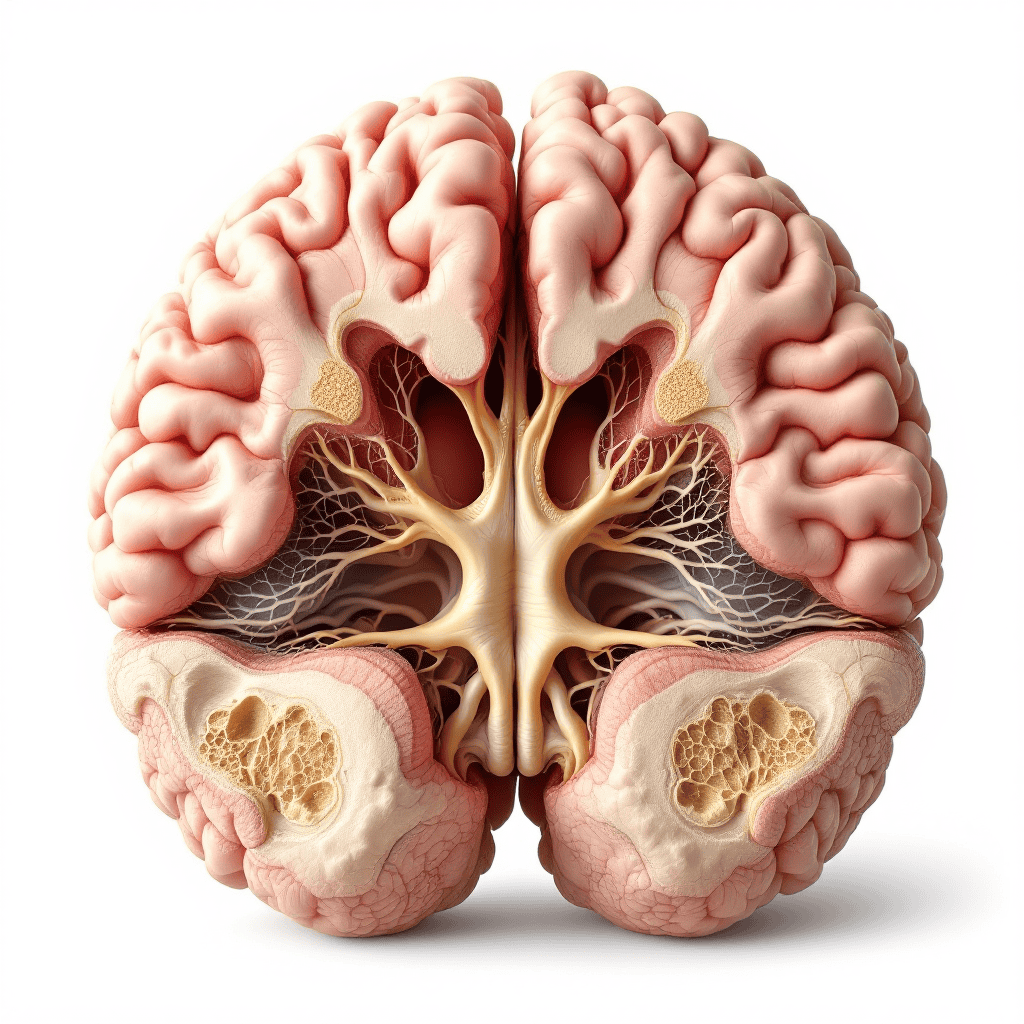
The reticular activating system explained begins with a simple truth: your brain receives 11 million bits of sensory data every second, but your conscious mind can process only about 50 bits. The massive gap between what exists and what you perceive is managed by a neurological gatekeeper called the reticular activating system, a network of neurons at the base of the brainstem that filters reality before you ever experience it. This isn’t just a biological curiosity. It’s the mechanism that determines what becomes your world.
Without the reticular activating system, you would be overwhelmed into paralysis. Every sound, every flicker of light, every sensation hitting your nervous system would demand equal attention. The RAS prioritizes what reaches conscious awareness based on your current goals, emotional state, beliefs, and recent focus. It doesn’t change reality. It changes what you’re allowed to notice.
How the Reticular Activating System Actually Works
The reticular activating system sits at the juncture where the spinal cord meets the brain, a position that gives it first access to nearly every sensory signal entering your nervous system. Visual input, auditory signals, tactile sensations, all pass through or near this network before reaching higher processing centers. The RAS acts as a priority algorithm, tagging certain inputs as relevant and allowing others to fade into background noise.
When you decide to buy a red car, red cars suddenly appear everywhere. They were always there. Your reticular activating system was filtering them out because they were irrelevant. The moment your intention changed, the filter updated, and your rendered reality shifted accordingly. This is not confirmation bias in the cognitive sense. It’s pre-conscious filtering at the neurological level.
The mechanism operates through a combination of arousal and attention. The RAS maintains your baseline level of wakefulness and alertness, which is why damage to this area often results in coma. But beyond basic arousal, it also modulates which specific stimuli break through to conscious awareness. It scans for novelty, threat, personal significance, and alignment with current mental models. What matches your existing beliefs, fears, or goals gets flagged. What doesn’t match gets discarded before you ever perceive it.
The Biology Behind Your Perception Filter
Neuroscience confirms that the reticular activating system doesn’t wait for conscious thought to evaluate importance. It operates automatically, shaped by repetition, emotion, and survival priority. Fear trains it to scan for threats. Desire trains it to scan for opportunity. Belief trains it to scan for confirmation. The system is self-reinforcing: what the RAS selects becomes your experience, your experience reinforces your beliefs, and your beliefs retrain the RAS.
This creates a closed loop. A person conditioned to expect danger will have their RAS tuned to detect threat signals in neutral environments. A person conditioned to expect abundance will notice opportunities that others in the same room never see. Same environment. Different rendered reality. The reticular activating system explained in this way reveals why two people can attend the same event and leave with opposite memories. They weren’t experiencing the same event. They were experiencing two different filtered versions.
The biological architecture is elegant and ruthless. Every neuron in the RAS receives input from multiple sensory channels and projects to widespread areas of the cortex, allowing it to influence perception across domains simultaneously. When the RAS flags something as important, it doesn’t just make you notice it. It amplifies the signal, recruiting attention, emotion, and memory systems to ensure the input is processed deeply. This is why emotionally charged experiences imprint more strongly than neutral ones. The RAS isn’t just opening the gate. It’s flooding the system.
Why Your Reality Feels So Real
The reticular activating system is the reason dismantling ego-driven perception requires more than intellectual understanding. Your reality doesn’t feel like a filtered subset of available information. It feels complete, objective, and true. That sensation of completeness is the RAS doing its job perfectly. It removes the evidence of its own filtering, presenting a seamless world where what you notice is all there is.
Consider how this operates in daily life. A racist’s RAS will selectively highlight stories and interactions that confirm existing prejudice while filtering out counter-evidence. An activist’s RAS will detect systemic injustice in every institution. A conspiracy theorist’s RAS will connect unrelated events into a coherent hidden pattern. Each person experiences their perception as obvious truth because the filtering happened before conscious thought ever engaged.
This isn’t a character flaw. It’s a biological feature that becomes a vulnerability when unexamined. The reticular activating system evolved to help you survive, not to help you perceive objective reality. It prioritizes speed and efficiency over accuracy. In a world where a rustling bush might be a predator, the cost of a false positive is low. The cost of a false negative is death. The RAS is biased toward detection, amplification, and pattern completion, even when the pattern isn’t actually there.
Reprogramming Your Reality Filter
Understanding how the reticular activating system explained here operates reveals the mechanism for change. If the RAS is trainable, shaped by repetition and emotional weight, then deliberate input can reshape what you perceive. This is not wishful thinking. It is neurological reprogramming.
The first step is recognizing that your current perception is not neutral. What you notice has been pre-selected by a filter built from childhood conditioning, repeated narratives, emotional imprints, and survival priorities. Most people defend their perception as though it were reality itself. The awakened recognize it as a rendering, one layer of code interpreting a deeper field.
The second step is selecting new inputs with precision. The RAS responds to what is repeated, emotionally charged, and aligned with stated intention. If you repeatedly expose yourself to fear-based media, your RAS will tune itself to detect threat. If you repeatedly engage gratitude practices, your RAS will begin flagging beauty, connection, and possibility. The filter adapts. The question is whether you are programming it deliberately or allowing it to be programmed by whatever noise is loudest.
Visualization and affirmation work not because they magically alter external reality, but because they train the RAS to notice opportunities that were always present. Timing practices that align inner cycles with external rhythms deepen this effect by creating states where the filter is more permeable, allowing new patterns to imprint more easily.
The Reticular Activating System and Belief
Belief doesn’t just color your interpretation of reality. It determines what reaches interpretation in the first place. The reticular activating system is the biological enforcement mechanism of belief. A mind convinced that life is hard will have its RAS tuned to detect evidence of difficulty, filtering out ease and grace even when present. A mind convinced that transformation is possible will notice paths, synchronicities, and openings that the fixed mindset never perceives.
This is where the concept intersects with sovereignty. A person whose RAS is programmed by external narratives, news cycles, cultural conditioning, peer consensus, is not experiencing their own reality. They are experiencing a reality curated by whoever controls the inputs. The Architects of Control understand this perfectly. They don’t need to change your mind. They only need to control what your RAS is trained to detect.
When fear is elevated, the RAS narrows its filter to survival signals: threat, scarcity, danger. Higher-order perception, pattern recognition, intuition, and long-term strategic thinking, all go offline. The filter collapses to a tunnel. This is why crisis is such an effective control mechanism. A population in chronic low-grade fear is a population whose reticular activating systems are locked in narrow-band mode, unable to perceive alternatives that exist outside the approved narrative.
Breaking this requires more than new information. It requires changing the state from which the RAS operates. Biological practices that restore inner coherence and dietary disciplines that clear systemic interference both serve the same function: they stabilize the nervous system so the RAS can operate from clarity rather than reactivity. When the body registers safety, the filter opens. Perception expands. What was invisible becomes obvious.
The Double-Edged Nature of Selective Attention
The reticular activating system is neither friend nor enemy. It is a tool, and like any tool, its usefulness depends on who is wielding it and for what purpose. In the hands of a sovereign individual, the RAS becomes a precision instrument for manifestation, focus, and intentional reality creation. In the hands of an unconscious person, it becomes a cage, reinforcing limiting beliefs and filtering out every signal that could shatter the illusion.
This dual nature appears throughout spiritual and psychological traditions. The Buddhists call it Maya, the veil of illusion. The Gnostics described Archons as forces that keep the soul imprisoned in false perception. Modern neuroscience names the mechanism: the reticular activating system. Different languages, same observation. Your experience of reality is not reality. It is a filtered, edited, pre-processed subset delivered by a system that operates below conscious awareness.
The danger is not the filtering itself. The danger is mistaking the filter for the whole. When you believe what you perceive is all there is, you become governable. When you recognize the filter, you can adjust it. That recognition is the beginning of sovereignty. It is also the beginning of responsibility. If your perception is shaped by what you repeatedly focus on, then your reality is your authorship. Not entirely. Not without constraint. But far more than most people ever realize.
There is a mechanism for accelerating this shift, a biological reset that clears accumulated noise and resets the RAS to a more receptive baseline. The full protocol in Master Thyself walks through the exact conditions required for that reset, including timing windows, fasting sequences, and the neurological thresholds that must be crossed before the filter can be consciously reprogrammed. The book doesn’t just describe the theory. It provides the method.
What the Reticular Activating System Reveals About Free Will
If the reticular activating system is determining what you notice before you notice it, where does choice enter? This is not an abstract philosophical question. It cuts to the core of whether free will exists or whether you are simply executing code written by forces outside your awareness.
The answer is both. You do not choose what your RAS was trained to detect during childhood, adolescence, or early adulthood. Those patterns were installed by caregivers, culture, and circumstance. But you can choose, once aware, to retrain the system. That retraining requires repetition, emotional investment, and sustained focus. It requires exposing the RAS to new patterns until they become familiar enough to register as relevant. It requires withdrawing attention from old patterns until they fade from priority.
This is why transformation is slow. The RAS does not update instantly. It updates through accumulated evidence that the new pattern matters. Every time you choose a different thought, a different input, a different emotional response, you are casting a vote. One vote doesn’t change the system. Ten thousand votes do. The reticular activating system explained in this framework is not a prison. It is a democracy of attention. The majority wins. And you control the ballot.
There is a threshold where this process accelerates. When enough votes accumulate in a new direction, the RAS tips. What required effort becomes automatic. What felt unnatural becomes default. The filter has been rewritten. This is not metaphor. It is observable in neural plasticity studies, where repeated mental rehearsal produces measurable changes in brain structure and function. The system is programmable. The question is whether you are the programmer or the program.
The Reticular Activating System and Manifestation
Manifestation teachings often fail because they skip the biological mechanism. Visualizing success while your RAS is tuned to detect failure produces cognitive dissonance, not results. The filter and the intention are misaligned. The affirmation says one thing. The nervous system broadcasts another. Reality responds to the broadcast, not the words.
When the reticular activating system is aligned with intention, manifestation stops being magical and becomes mechanical. You notice opportunities you would have missed. You take actions you would have avoided. You interpret setbacks as redirection rather than failure. Same external conditions. Different filtered perception. Different behavior. Different outcome.
The work is not convincing the universe to deliver. The work is training your RAS to detect what is already available. The red cars were always there. The opportunities were always present. The pathways were always open. You were filtering them out because your RAS was tuned to a different frequency. Manifestation is not creation from nothing. It is perception alignment with what already exists.
This distinction matters because it returns agency to where it belongs: inside you. You are not waiting for external conditions to change. You are changing the filter through which external conditions are perceived. That is power. That is sovereignty. And that is the real reason the reticular activating system matters.
Breaking the Loop
The reticular activating system runs on a feedback loop. What you believe shapes what you notice. What you notice reinforces what you believe. The loop closes. Most people live inside this loop their entire lives, convinced their perception is reality, never recognizing the filter that shaped it.
Breaking the loop requires interrupting the feedback at any point. Change the belief, and the RAS begins scanning for different evidence. Change the input, and the belief begins to soften. Change the emotional state, and both belief and input lose their grip. The system is robust, but it is not invincible. It can be hacked. It can be reprogrammed. And once reprogrammed, it becomes the tool it was always meant to be: a precision instrument for navigating reality, not a cage that defines it.
The reticular activating system explained here is not the enemy. It is the gatekeeper. And once you understand how the gate works, you can choose what passes through. That choice, repeated over time, becomes your reality. Not imposed from outside. Authored from within. That is mastery. That is the path. And that is what this entire system has been designed to obscure.