
Ego Death
What ancient mystics, modern psychonauts, and clinical psychology all describe as the same experience.
The complete dissolution of self-identity. For two thousand years, contemplative traditions called it crucifixion of the false self, fana, mukti, kenosis, satori. Modern neuroscience now measures it as a quantifiable shutdown of the default mode network. They are describing the same event.
This page is the synthesis: what ego death is, what the research shows, why every initiatic tradition mapped it, what comes after, and how to navigate it without rolling the dice on psychedelics.
What Ego Death Actually Is
Ego death is the temporary, complete dissolution of the sense of being a separate self. The "I" stops. Not metaphorically. The neural pattern that constructs the felt experience of being someone, having a name, owning thoughts, possessing a history, drops offline. What remains is consciousness without a center. Awareness without an "I" doing the awareness.
People who report it describe the same things across centuries and continents. There is no boundary between observer and observed. Time loses linearity. Memory becomes optional. The body is felt but not owned. There is often an overwhelming sense that nothing was ever wrong, and that the small self carrying all those concerns was a costume the universe was wearing.
The experience itself is not enlightenment. Enlightenment is what you do with the experience afterward, how you let it restructure the way you live. Ego death is the doorway. The room is the rest of your life.
The Clinical Picture
Johns Hopkins, NYU, Imperial College London, and MAPS have published the most rigorous studies on psilocybin sessions. Participants reliably rate their experiences, on validated scales, as among the most personally meaningful of their lives. Often more meaningful than the birth of a first child or the death of a parent. The mechanism, traced through fMRI, is striking.
Specific sequencing and full protocol: Redacted, Chapter 22.
Under psilocybin the default mode network, the set of brain regions most active when you are mentally rehearsing your story, ruminating on the past, planning the future, comparing yourself to others, goes quiet. Cross-network communication explodes. Regions that normally do not talk to each other start firing in concert. The brain temporarily becomes one integrated system instead of a federation of specialists.
The post-experience changes are the headline. Treatment-resistant depression, end-of-life anxiety, addiction, OCD. The remission rates in supervised settings are not small, they are paradigm-shifting. A single dose, sometimes a single session, producing months or years of stable change.
The catch: the research is on guided clinical settings with screening, preparation, and integration. The benefits are not the molecule. They are the experience the molecule reliably produces, plus the meaning the participant makes of it afterward. Without integration the experience fades like a vivid dream. With integration it restructures a life.
Every Tradition Mapped This
If ego death were a quirk of modern pharmacology, you would not expect every contemplative tradition on earth, developed independently, to describe the same destination with different vocabularies. They do.
- Buddhism: anatta (non-self) and nirvana (the extinguishing of the flame of grasping). The Pali Canon is explicit. Liberation is the seeing-through of the self-illusion.
- Christianity (mystical): Paul's "I have been crucified with Christ; it is no longer I who live, but Christ who lives in me" is not a metaphor for being well-behaved. Meister Eckhart, John of the Cross, Teresa of Avila wrote about the same dissolution. The "dark night of the soul" is the disorientation phase.
- Sufism: fana, annihilation of the self in the divine, followed by baqa, subsistence in the divine. Rumi: "Die before you die, then you will not die when you die."
- Hinduism / Vedanta: moksha and mukti, liberation from the false identification with the body-mind. The Upanishads return to this theme constantly.
- Zen: kensho and satori. Direct seeing-into the nature of self, which the tradition does not consider an achievement but a recognition of what was always the case.
- Hermeticism and the mystery schools: Initiates were ritually "killed" and "reborn." The first death was the dissolution of the small self. The second body was the soul, finally trusted to lead.
These are not coincidences. The traditions developed in isolation. The destination is the structure of the human nervous system meeting the structure of the universe and arriving at the same recognition. Stop pretending you are a separate thing. You never were.
Ego Death Is Not Self Death
This is where modern conversation goes off the rails. Ego death does not mean the destruction of personality, preferences, or the capacity to function. The marketing of psychedelics sometimes implies a clean wipe. That is not the experience and it is not the goal.
The ego, properly understood, is the machinery that constructs the felt sense of being a separate, defended, named self. It runs on threat-detection, comparison, narrative-rehearsal, future-projection. It is useful. You need it to file taxes, drive a car, remember where you put your keys.
What dies in ego death is not the machinery. It is the over-identification with the machinery. The mistake of thinking the costume is the actor. After ego death the ego is still there. You still know your name. You still have preferences. But there is now space between you and the machinery. Awareness has discovered it is the audience, not the play.
The deeper Self, the one the word made flesh traditions point at, is not destroyed. It is finally able to lead, because the small self has stopped pretending to be it.
The Full Map
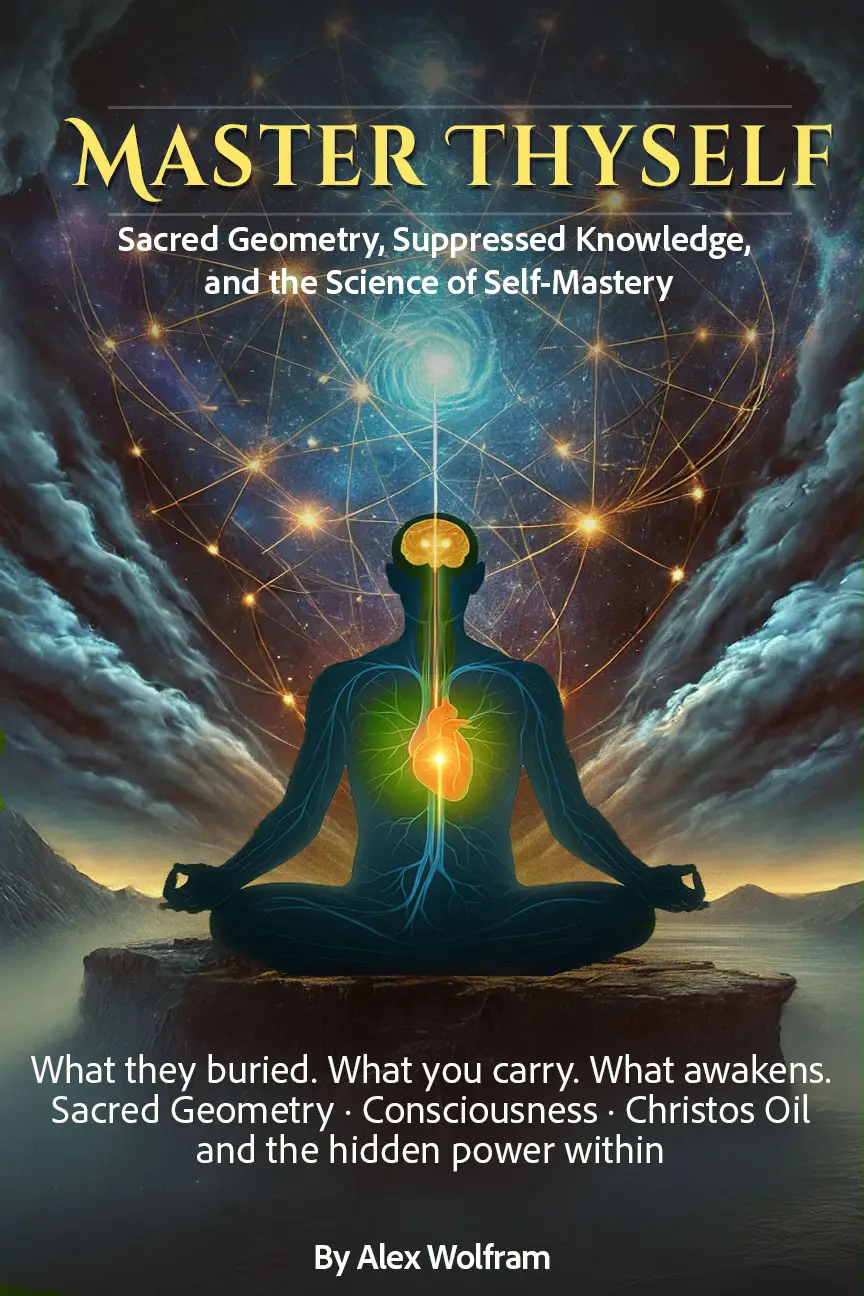
Ego death is Chapter 17 and Chapter 22 of Master Thyself. The framework: the antichrist isn't a person, it's the false self every initiate has to dethrone. The book traces the same death-and-resurrection grammar through 24 chapters and six traditions.
What Comes After
The disorientation period after ego death is real. The clinical literature calls it the integration phase. Mystical traditions called it the dark night of the soul. The structure of the small self has been seen through, but the daily habits, identities, relationships, careers it built are still standing. Something has to be rebuilt or pruned.
Common patterns in the months after:
- Old grievances lose their charge. You can still remember the story, but the felt insult is gone.
- Anxiety drops. Not because the conditions improved but because the one who was anxious has lost its primary fuel of self-defense.
- Compulsive consumption falls away. Substances, scrolling, shopping, work-as-identity, the stuff that the small self uses to anesthetize its constant background discomfort, just gets less interesting.
- Relationships sort themselves. The ones built around the false self destabilize. The ones built around what is real get easier.
- Work changes. Not always career change. Often the same work done from a different center.
There is also a failure mode. Some people interpret ego death as a license to bypass responsibility, ethics, the dishes. Spiritual bypass is the technical term. The mystics had a strict counter to this: if your "awakening" makes you less compassionate, less reliable, more difficult to live with, you had an experience, not a realization. Read more on spiritual bypassing.
The Sober Path
Every tradition that mapped ego death developed it before there were research-grade molecules. Most of them did not need any. The technologies they used overlap more than they differ.
- Long retreat. Ten days, three weeks, longer. Removing the normal feedback loops, novelty, news, conversation, that keep the self-narrative refreshed.
- Concentration practice. Sustained attention on one object (breath, mantra, image) until the watcher and watched start to merge. The Yoga Sutras call this samadhi.
- Fasting. Not extreme. The traditions used moderate biblical fasting patterns. Hunger destabilizes the small self because the small self is fed.
- Inquiry. "Who is having this experience?" asked again and again, not as a riddle but as a sincere search for the experiencer. Ramana Maharshi made this the heart of his teaching.
- Devotion. The bhakti path. Sustained orientation toward something larger than the small self until the orientation itself dissolves the orientor.
These methods are slower than a clinical session. They are also more durable. The integration is baked into the practice rather than bolted on afterward.
Five Misunderstandings
1. Ego death is a peak experience. It can be. It can also be unremarkable, even boring. The depth of the experience does not correlate with the depth of the realization. Some people have dramatic visions and change nothing. Some have a quiet recognition and reorganize their entire life around it.
2. Once is enough. The traditions that took this seriously expected initiates to revisit the dissolution repeatedly. The first time clears the conceptual block. The next times deepen the structural change.
3. Ego death equals enlightenment. No. Ego death is the loss of the felt sense of being a separate self. Enlightenment, depending on the tradition, includes that recognition, the stable integration of it, and the embodied wisdom that follows. Buddhist texts list dozens of subtle clingings that remain after the first big drop.
4. You can think your way to it. The intellectual understanding that the self is a construction does not produce the experiential recognition. Knowing the menu is not eating the meal.
5. The psychedelic shortcut is free. The clinical research is on screened populations, supervised settings, integration support. Unsupervised dosing can produce experiences the user is not prepared to integrate. The traditions called these "spiritual emergencies" and built infrastructure to handle them. Most modern users do not have that infrastructure.
What the Integration Phase Actually Requires
The experience itself, however dramatic, is only the beginning. What determines whether the work produces lasting change or evaporates into a memory is the integration phase: the weeks and months after the experience during which the new perspective either gets woven into daily life or fades back into the prior pattern. The integration phase is the part most often skipped, and skipping it is the most common reason people report that "I had this huge experience and nothing came of it."
Integration is not mystical. It is the practical work of translating an altered-state recognition into ordinary-state behavior. A few principles consistently show up across traditions that take the integration phase seriously:
- Write it down within twenty-four hours. The clarity of the experience fades faster than people expect. A detailed written account, made while the recognition is still fresh, becomes the reference document you return to when the ordinary self resumes operation. Memory alone is not reliable. Written record is.
- Tell one trusted person. Speaking the experience out loud to someone who can hear it without trying to fix it or interpret it for you forces you to put it into words. The act of articulation does work that silent rumination cannot do. The listener does not need to understand fully; they need to be present.
- Change one concrete thing. Pick one habit, relationship, or behavior that the experience showed you was no longer serving. Change it deliberately within the first month. The recognition lives or dies on whether it actually shifts your conduct. A change you can point to is the difference between "I saw something" and "I am living differently because of what I saw."
- Do not chase the next experience. The seeking pattern that brought you to the first experience will, if unchecked, immediately start seeking the next one. This is the trap. The work is to live the implications of what you already saw, not to acquire another peak event. Repeated peak experiences without integration produce people who are addicted to the experiences and who never actually change.
- Expect a settling period. The first weeks after a profound experience often involve emotional volatility, sleep changes, dietary shifts, and an inability to engage with media or conversations that previously felt normal. This is the nervous system reorganizing. Plan for it. Reduce obligations where possible. Eat regular meals. Sleep enough. Avoid major decisions for several weeks.
- Find or build community. The hardest part of integration is that the recognition is often profoundly socially isolating. Friends and family who did not have the experience cannot meet you where you now are, and that gap can produce real grief. A community of people who have done similar work, even if you only see them occasionally, is what makes the integration sustainable rather than lonely.
Integration is unglamorous. It is the part nobody puts on the brochure. It is also the part that determines whether the experience becomes a foundation for the rest of your life or just an interesting story you tell at dinner parties. Treat it with the seriousness it deserves.
The full protocol, the specific sequencing, and the why behind each step are covered in the book: Redacted, Chapter 22.
Master Thyself, Chapter 22 Read Master Thyself →Frequently Asked Questions
Is ego death dangerous?
The experience itself, in a contemplative setting with adequate preparation, is not physically dangerous. The risk is psychological. People with unstable mental health conditions, particularly those with a personal or family history of psychotic disorders, can have prolonged disorientation after intense experiences. This is why the clinical psilocybin studies screen carefully.
What does ego death feel like?
Reports converge on: dissolution of the boundary between self and surroundings, loss of normal time perception, an overwhelming sense that nothing was ever wrong, often profound emotional release. The specifics vary. The structure is the same.
Is the default mode network the ego?
The default mode network is the neural correlate of self-referential thinking. It is the machinery the felt sense of self uses to produce itself. Whether it is the ego or just one of its key components is still debated. What is clear is that quieting it correlates with the felt dissolution of self.
Can meditation alone produce ego death?
Yes. The traditional answer is that sustained concentration practice eventually produces the same kind of state shift psychedelics produce pharmacologically. The path is longer. The integration tends to be more durable.
What is the difference between ego death and dissociation?
Dissociation is a defensive withdrawal of awareness in response to threat. The world feels unreal, the body feels distant, the self feels muted. Ego death is the opposite. The world feels more real, the body more immediate, awareness more present. The self is what fades, not the world.
Is ego death the same as enlightenment?
No. Ego death is an experience, sometimes a recognition. Enlightenment, in the traditions that use that word, is the stable integration of that recognition into ordinary life. Most teachers say the first experience is the easy part. The decade after is the work.
24 Chapters. One Coherent Map.
Ego death is the keystone of the second half of the book. The first half builds the framework: consciousness, geometry, the architecture of perception. The second half traces the death-and-resurrection grammar through every tradition that ever mapped it. Chapter 17 is "The Wrong Antichrist." Chapter 22 is "Master Thyself."
Get Your Copy on Amazon