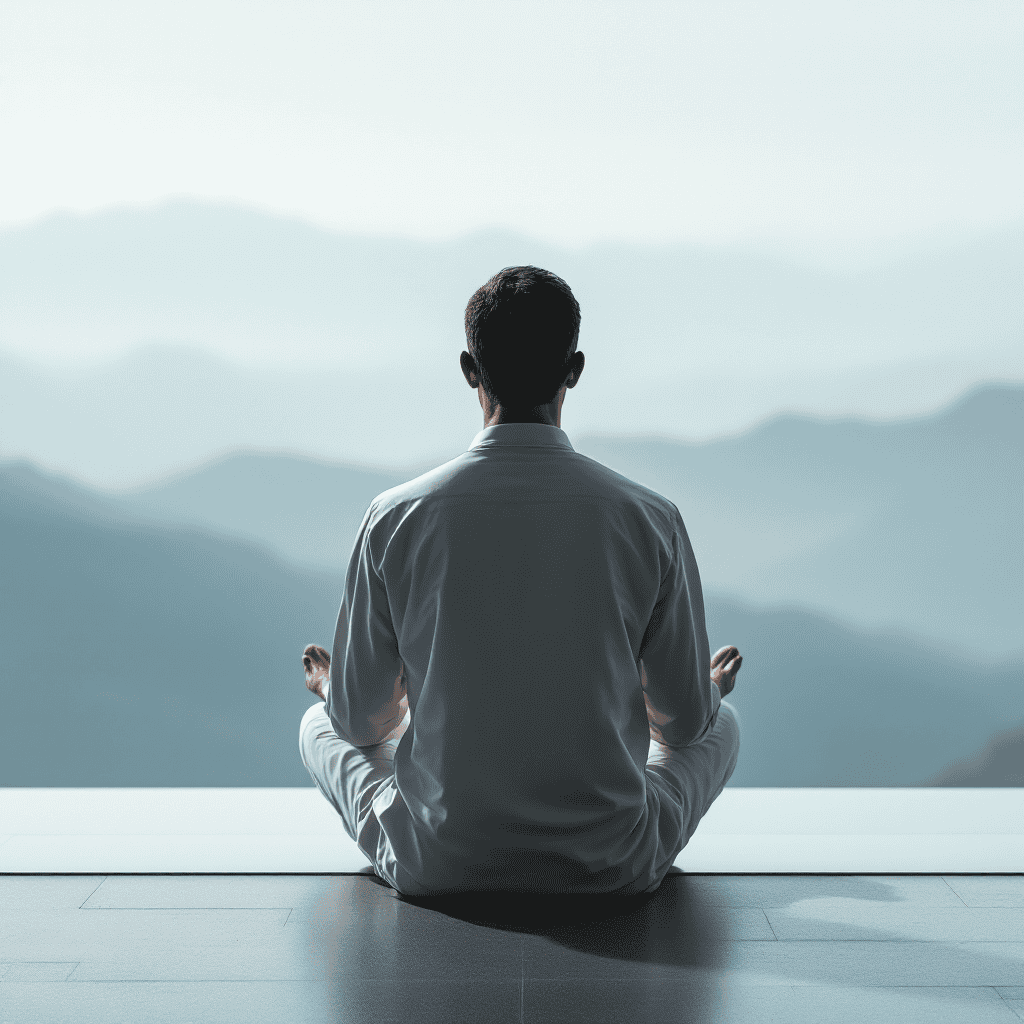
How to let go of ego is the question that stops most people before they even start. Not because the ego is strong, but because most of us mistake it for who we are. The voice in your head that narrates your life, defends your identity, and keeps score of every slight isn’t you. It’s a program running on autopilot, and learning to quiet it is the most powerful move toward freedom you can make.
The ego isn’t evil. It’s a survival tool, designed to protect you from physical and social threats. But in the modern world, that tool has hijacked the entire system. It doesn’t just protect anymore. It controls. It amplifies fear, manufactures conflict, and keeps you locked in reactive patterns that serve everyone except you. The result? A life lived in defense mode, where every conversation becomes a competition and every challenge feels like a personal attack.
Understanding how to let go of ego starts with recognizing what it actually is. In psychological terms, the ego is the constructed sense of self, the identity you’ve built from your experiences, beliefs, and the stories you tell yourself. It’s the part of you that says “I am this, not that.” “I am successful.” “I am a victim.” “I am right.” Every label, every attachment, every defended position is ego in action.
The problem isn’t that the ego exists. The problem is when it becomes the driver instead of the passenger. When the ego takes control, perception narrows. You stop seeing reality as it is and start seeing it through the filter of how it affects you. That filter is what the ancients called cognitive bias, and modern psychology has confirmed it operates automatically, shaping your reactions before conscious thought even arrives.
Why the Ego Resists Letting Go
The ego doesn’t want to die. It believes that if you let go, you’ll disappear. That fear is hardwired. Every time you try to quiet the ego, it interprets the attempt as a threat to your survival. The nervous system responds exactly as it would to physical danger: cortisol spikes, the fight-or-flight response activates, and suddenly every reasonable insight about letting go feels impossible to hold onto.
This is why willpower alone doesn’t work. You can’t force the ego to surrender through discipline or intention. The harder you push against it, the louder it becomes. The ego feeds on conflict, including the conflict you create by trying to destroy it. This is the trap most spiritual seekers fall into: they turn ego dissolution into another ego project, another identity to defend.
What actually works is understanding the mechanism beneath the resistance. The ego operates through a specific biological pathway. When you feel attacked, criticized, or uncertain, the amygdala (the brain’s threat detection center, a small almond-shaped structure deep in the brain) fires before your rational mind can intervene. That signal floods your body with stress hormones and locks you into a defensive state. In that state, letting go isn’t just difficult. It’s biologically inaccessible.
The path forward isn’t destruction. It’s regulation. When the nervous system feels safe, the ego relaxes its grip. When the body registers coherence rather than threat, the identity you’ve been defending stops feeling like the only thing keeping you alive. This is where the work of dissolving ego patterns and reclaiming inner sovereignty becomes practical rather than theoretical.
The Difference Between Ego and Self
Before you can let go of ego, you need to understand what remains when it’s gone. The fear that keeps most people clinging to ego is the belief that without it, there’s nothing left. That’s not true. What remains is the Self, the awareness that exists before thought, before identity, before the stories you tell yourself about who you are.
The ego is the narrator. The Self is the witness. The ego says “I am angry” and believes it. The Self notices “anger is present” and observes it without becoming it. This distinction isn’t abstract philosophy. It’s a functional difference that changes how you move through the world.
When the ego runs the show, every experience is personal. Someone cuts you off in traffic, and you’re furious. Your boss criticizes your work, and you spiral into shame. A friend cancels plans, and you feel rejected. The ego takes everything as evidence of something about you. The Self sees the same events as information, not identity.
The Stoic philosophers understood this centuries ago. Marcus Aurelius wrote that you have power over your mind, not outside events. Epictetus taught that suffering comes not from events themselves, but from the stories we tell about them. Both were pointing at the same truth: the ego creates suffering by making everything about itself. The Self experiences life without needing it to confirm anything.
The Body Holds the Key
Most teachings on ego focus on the mind. They tell you to watch your thoughts, question your beliefs, and dissolve your attachments. All of that is useful. None of it is enough. The ego doesn’t live only in your head. It lives in your body, encoded in your nervous system, your hormones, and your habitual stress responses.
The way you breathe, the tension you carry in your shoulders, the chronic low-grade anxiety that hums in the background of your day, all of these are ego patterns made physical. When the body is stuck in survival mode, the ego stays in control no matter how much insight you gain. This is why meditation alone often isn’t enough. You can sit in stillness for hours, but if your nervous system is signaling threat, the ego will snap back into place the moment you stand up.
True release requires working with the body directly. Slow, rhythmic breathing activates the vagus nerve (the longest nerve in the body, running from brainstem through heart and lungs to gut), which signals safety to the nervous system. When the vagus fires, cortisol drops, heart rate variability increases, and the body shifts out of defense mode. In that state, the ego’s grip loosens naturally. You don’t have to force it. You just stop feeding it the stress chemistry that keeps it alive.
Fasting is another lever. When appetite quiets, the body stops prioritizing immediate survival and shifts into repair mode. Autophagy (the process where cells break down and recycle damaged components) begins clearing old patterns at the cellular level. The identity structures you’ve been carrying start to dissolve not because you’ve convinced yourself they’re false, but because the biology underneath them has changed. The timing of these biological cycles matters, and when aligned with natural rhythms, the work deepens in ways discipline alone cannot reach.
Practical Steps to Release Ego’s Grip
The process of letting go isn’t mystical. It’s methodical. What follows are the specific practices that create the conditions for ego dissolution. These aren’t beliefs to adopt. They’re tools to use.
Observe Without Identifying
The first step is learning to watch your thoughts without becoming them. Every time the inner narrator starts running, pause. Notice it. The voice saying “I should have said something different” or “I can’t believe they treated me that way” is ego constructing a story. You don’t have to argue with it. You don’t have to believe it. Just notice it’s there. Over time, that gap between the thought and your reaction to it widens. That gap is freedom.
Regulate the Nervous System
Practice coherent breathing: five seconds in, five seconds out, for two to five minutes whenever stress rises. This isn’t relaxation. This is direct intervention in the autonomic nervous system. When heart rate variability stabilizes, the brain receives a safety signal. The ego’s defensive programming can’t sustain itself in a regulated body. The practice is simple, but the mechanism behind why it works so reliably is detailed in the complete framework, including the timing windows and integration protocols that turn temporary relief into lasting recalibration.
Fast From Identity
Choose one day each week to fast from the narratives you repeat about yourself. Don’t tell the story of how you were wronged. Don’t rehearse your achievements. Don’t defend your position in an argument. Just for one day, let all of it go. Notice what happens when you stop performing your identity. Most people discover that without the constant reinforcement, the identity feels less solid. That’s not a problem. That’s the point.
Question Your Attachments
Make a list of everything you believe defines you: your job, your relationships, your beliefs, your possessions. Then ask: if I lost this tomorrow, would I still be me? The things that make you panic at the thought of losing them are the things your ego is using to construct your sense of self. They’re not bad. But they’re not you. Recognizing the difference is how you stop handing your sovereignty to things outside your control.
Embrace Discomfort
The ego craves comfort and certainty. Growth happens in the opposite direction. Deliberately put yourself in situations where you don’t have the answers, where you’re not the expert, where you might look foolish. The ego will scream. Let it. Every time you move forward despite the discomfort, you prove to your nervous system that uncertainty isn’t death. That proof is what allows the ego to relax.
The Role of Silence and Stillness
Silence terrifies the ego. When there’s no noise, no distraction, no input to react to, the ego has nothing to do. It starts generating problems just to stay relevant. This is why most people can’t sit in silence for more than a few minutes without reaching for their phone, turning on music, or finding something to fill the space.
But silence is where the Self emerges. In the absence of external stimulation, the awareness underneath all the noise becomes visible. You start to notice that you exist independent of thought, independent of identity, independent of the stories you’ve been telling. That recognition doesn’t come through effort. It comes through stopping long enough for the dust to settle.
Meditation is the most direct path to this. Not the kind of meditation that’s about achieving a particular state or mastering a technique. The kind that’s simply sitting with what is. Thoughts will arise. Let them. Emotions will surface. Let them. The ego will try to turn the practice into another project, another thing to get right. Let that go too. The practice isn’t about becoming good at meditation. It’s about recognizing that you are not the thoughts, emotions, or identity structures that meditation reveals.
Darkness amplifies this work. The pineal gland (a small, pinecone-shaped gland deep in the brain that regulates sleep-wake cycles) responds to light even through closed eyelids. Meditating in complete darkness removes that input and allows the nervous system to drop into deeper states more readily. The biological mechanisms of the pineal extend far beyond circadian rhythm, and when the conditions are right, perception itself begins to reorganize.
What Ego Death Actually Feels Like
The term “ego death” sounds dramatic, but the experience is quieter than most people expect. It’s not an explosion. It’s a dissolving. The boundaries you’ve been defending start to feel less important. The narratives you’ve been repeating lose their grip. The identity you’ve been protecting stops feeling like the center of everything.
What replaces it isn’t emptiness. It’s presence. You’re still here. You still have preferences, opinions, and a personality. But none of it feels urgent anymore. The need to be right fades. The compulsion to defend yourself weakens. The fear of being seen as less than perfect stops dictating your choices.
Some people reach this state through sustained practice. Others glimpse it during moments of crisis, when the old identity collapses and there’s nothing left to hold onto. Both paths work. What matters is what you do with the opening. Most people panic and rebuild the ego as quickly as possible. A few stay in the discomfort long enough to realize they don’t need it the way they thought they did.
The traditions describe this threshold as a death and rebirth. The person who emerges on the other side looks the same from the outside. But internally, the operating system has changed. Decisions come from clarity rather than fear. Relationships become connection rather than transaction. Life becomes experience rather than performance. That shift doesn’t happen through belief or intention. It happens through the biological and psychological restructuring that the practices outlined here create when applied consistently over time.
The Ego’s Final Trick
Here’s the trap almost everyone falls into: the ego will try to co-opt the process of letting go. It will turn “I’m working on my ego” into a new identity to defend. It will compare your progress to others. It will judge you for not being further along. It will make the work of ego dissolution into another performance, another way to prove you’re special.
The only way past this is to see it when it’s happening and laugh. The ego is so predictable that once you recognize the pattern, it loses most of its power. Every time you catch yourself taking your spiritual progress too seriously, you’ve already stepped outside the ego’s control. The witness who notices the performance isn’t performing. That witness is the Self.
Humility is the antidote. Not the false humility that’s just ego in disguise, the kind that says “I’m so humble” while secretly feeling superior. Real humility is recognizing that you don’t know as much as you think you do, that your perspective is limited, and that the universe doesn’t revolve around your experience. When humility becomes your baseline, the ego has nothing left to defend.
Living Without the Ego in Charge
Letting go of ego doesn’t mean becoming passive. It doesn’t mean losing your edge, your ambition, or your ability to function in the world. What it means is that those qualities are no longer running on fear, insecurity, or the need to prove something. You can still achieve. You can still compete. You can still build. But the motivation shifts from “I need this to feel whole” to “this is what I choose to create.”
The ego-driven life is exhausting because it’s never enough. Every achievement raises the bar. Every success creates a new anxiety about losing it. The Self-driven life is sustainable because nothing external is required for you to feel complete. You engage fully with life not because you need it to validate you, but because engagement is what you choose.
This is what the mystics meant when they said the kingdom is within. Not that you should withdraw from the world, but that your center of gravity shifts from outside to inside. When that happens, the world stops having power over you. You’re still affected by events. You still feel pain, loss, and disappointment. But none of it collapses you. You bend instead of breaking. You adapt instead of defending. You flow instead of forcing.
The balance between opposites becomes easier to navigate when the ego isn’t constantly tipping the scale in its own favor. What looked like contradictions, strength and softness, confidence and humility, ambition and surrender, resolve into a single coherent movement. That’s not a philosophy. That’s what happens when the system that was designed to fragment you finally stops running.
The Path Forward
Learning how to let go of ego is not a one-time event. It’s a practice you return to daily, sometimes hourly. The ego doesn’t disappear. It just stops being in charge. Some days it’s quiet. Other days it roars back with a vengeance. What changes is your relationship to it. You stop believing everything it says. You stop letting it dictate your choices. You stop mistaking its voice for truth.
The work is simple but not easy. Observe your thoughts. Regulate your nervous system. Fast from identity. Sit in silence. Question your attachments. Embrace discomfort. Repeat. The results aren’t dramatic. They’re cumulative. One day you notice that the thing that used to send you into a rage now just rolls off. The person whose opinion used to control you no longer has that power. The achievement you were chasing feels less urgent because you’re no longer trying to prove anything.
That’s freedom. Not the absence of challenges, but the presence of choice. Not the end of the ego, but the beginning of something larger. You step into the version of yourself that was always there, waiting underneath the noise. And from that place, everything you were trying to force finally starts to flow.